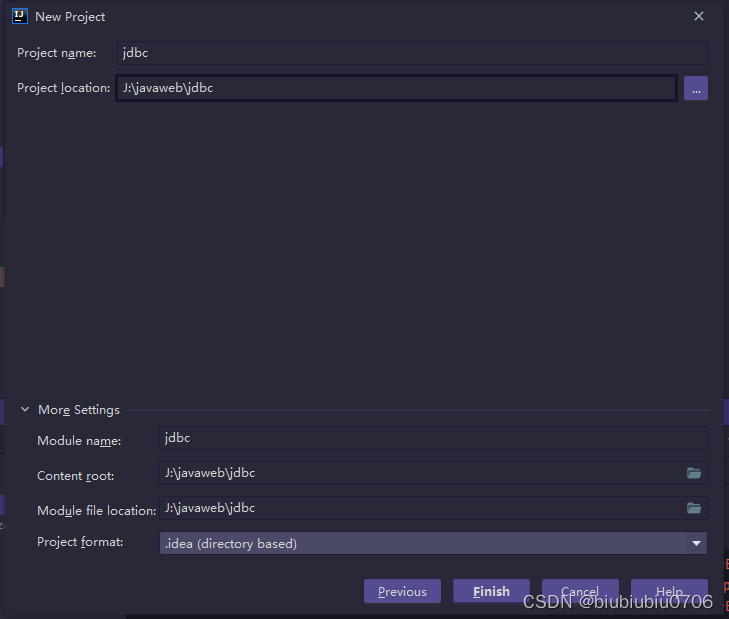

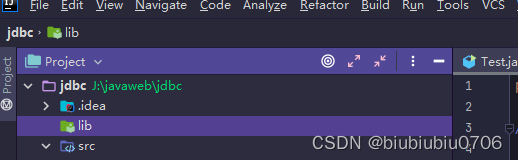
引入mysql驱动依赖,一般会建个lib包,如果是java web项目 一般将以来包创建在web->WEB-INF下,
这里我就随便了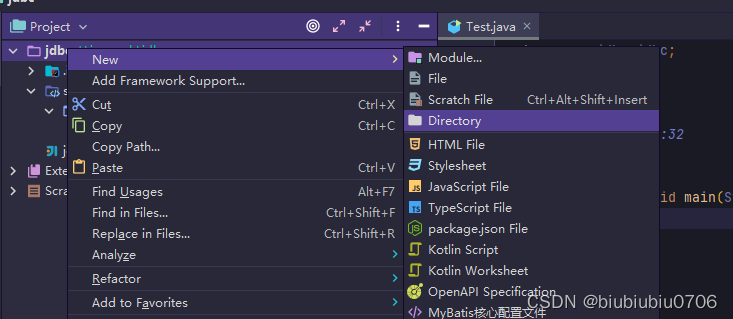

建议
try {

} catch (SQLException throwables) {
    throwables.printStackTrace();
}finally {

}
的写法,这里就简写了

写个工具类
public class DBUtil {

    static{
        try {
            Class.forName("com.mysql.cj.jdbc.Driver");
        } catch (ClassNotFoundException e) {
            e.printStackTrace();
        }
    }

    //获取数据库连接对象  抛异常,谁使用,谁负责
    public static Connection getConnection(String url,String username,String password) throws SQLException {
        Connection connection = DriverManager.getConnection(url, username, password);
        return connection;
    }

    /**
     * 释放资源
     * @param conn 数据库连接对象
     * @param st 执行对象
     * @param rs 结果集对象
     */
    public static void close(Connection conn, Statement st, ResultSet rs){

        if (conn!=null){
            try {
                conn.close();
            } catch (SQLException e) {
                e.printStackTrace();
            }
        }
        if (st!=null){
            try {
                st.close();
            } catch (SQLException e) {
                e.printStackTrace();
            }
        }
        if (rs!=null){
            try {
                rs.close();
            } catch (SQLException e) {
                e.printStackTrace();
            }
        }
    }
}
上面工具类的坏处就是换数据库驱动要改源码,改进下
在src下新建个文件夹 resource 如果不能创建,简单粗暴的方式,
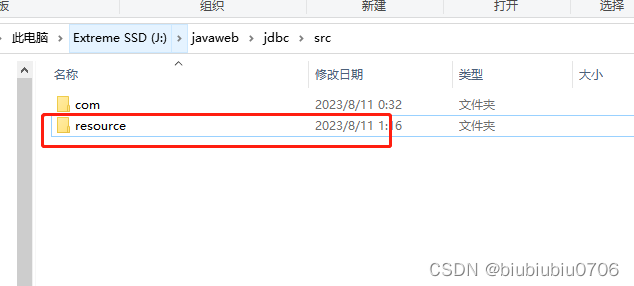
创建个jdbc.properties文件,名字随意
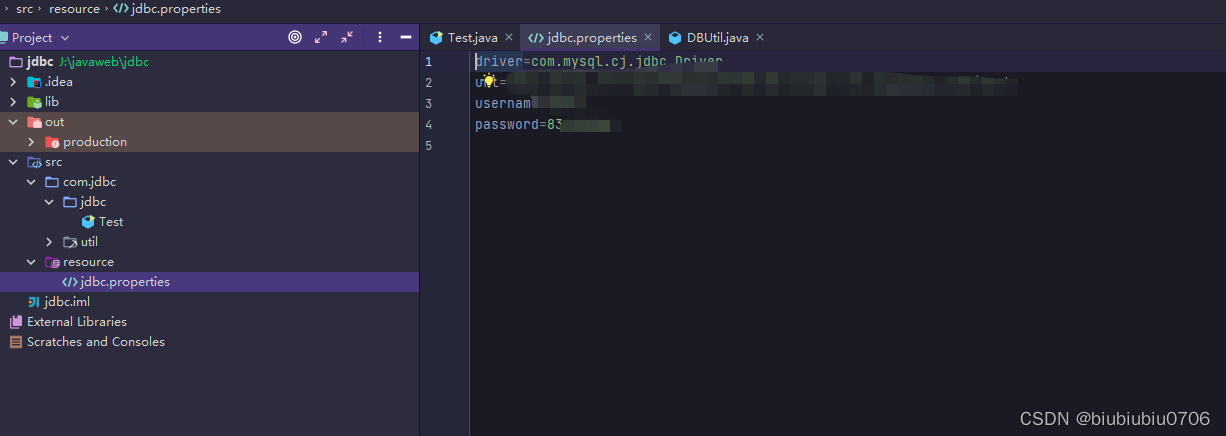
新建个类DBUtil1,ResourceBundle会读resource目录下的文件
public class DBUtil1 {
    //静态变量:在类加载时候执行,并且是有先后顺序的.自上而下
    private static ResourceBundle bundle=ResourceBundle.getBundle("resource.jdbc");
    private static String driver=bundle.getString("driver");
    private static String url=bundle.getString("url");
    private static String username=bundle.getString("username");
    private static String password=bundle.getString("password");

    static{
        //注册驱动(注册却动只需要注册一次,放在静态代码块当中.DBUtil1类加载的时候执行)
       try {
            //"com.mysql.jdbc.Driver"是连接数据库的驱动,不能写死,因为可能以后改成Oracle数据库
            //如果连接Oracle数据库的时候,还需要修改java代码,显然违背OCP开闭原则
            //OCP开闭原则:对扩展开发,对修改关闭.(什么是复合OCP呢?在进行功能扩展的时候,不需要修改java源代码)
            //Class.forName("com.mysql.cj.jdbc.Driver");
            Class.forName(driver);
        } catch (ClassNotFoundException e) {
            e.printStackTrace();
        }
    }

    //获取数据库连接对象  抛异常,谁使用,谁负责
    public static Connection getConnection() throws SQLException {
        Connection connection = DriverManager.getConnection(url, username, password);
        return connection;
    }

    //关闭连接 释放资源

    /**
     * 释放资源
     * @param conn 数据库连接对象
     * @param st 执行对象
     * @param rs 结果集对象
     */
    public static void close(Connection conn,Statement st,ResultSet rs){

        if (conn!=null){
            try {
                conn.close();
            } catch (SQLException e) {
                e.printStackTrace();
            }
        }
        if (st!=null){
            try {
                st.close();
            } catch (SQLException e) {
                e.printStackTrace();
            }
        }
        if (rs!=null){
            try {
                rs.close();
            } catch (SQLException e) {
                e.printStackTrace();
            }
        }
    }
}
新建个类Test1测试
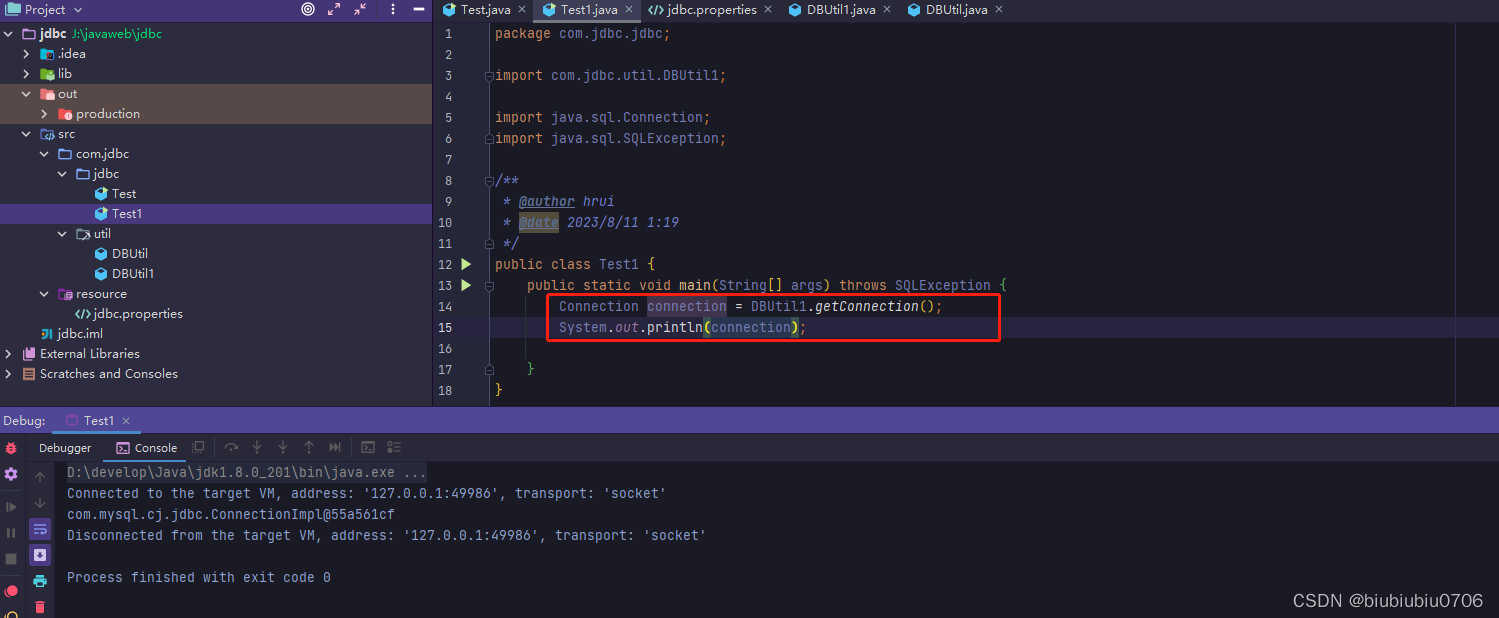
public class Test1 {
    public static void main(String[] args) throws SQLException {
//        Connection connection = DBUtil1.getConnection();
//        System.out.println(connection);
        Connection conn=null;
        PreparedStatement ps=null;
        ResultSet rs=null;

        try {
            conn = DBUtil1.getConnection();

            String sql="select * from user";
            ps=conn.prepareStatement(sql);
            rs = ps.executeQuery();
            while(rs.next()){


            }

        } catch (SQLException e) {
            e.printStackTrace();
        }finally {
            DBUtil1.close(conn, ps, rs);
        }

    }
}