目录
1.本文实现目标
2.自定义注解
3. 定义controller加上自定义的注释
4. 识别到这个注解
5.扫描目录,返回该目录下所有文件名(全限定名)
6.扫描该文件所在包中所有带这两个注解的类和方法放到map中
7.通过反射的方式创建实例
8.通过exec方法调动实例,执行实例中的方法
9.执行结果
1.本文实现目标
- 自定义注解
- 识别到这个注解
- 通过反射的方式创建实例
- 通过exec方法调动实例,执行实例中的方法
2.自定义注解
详见:自定义注解(Annontation)_qq_52240237的博客-CSDN博客
import java.lang.annotation.*;

@Documented
@Retention(RetentionPolicy.RUNTIME)
@Target(ElementType.TYPE)
public @ interface Controller {
}
import java.lang.annotation.*;

@Documented
@Retention(RetentionPolicy.RUNTIME)
@Target({ElementType.TYPE,ElementType.METHOD})
public @interface RequestMapping {
    /**
     *
     * @return
     */
    String value() default "";
}
3. 定义controller加上自定义的注释
@Controller
@RequestMapping("test")
public class TestController {
    @RequestMapping
    public  String index(){
        System.out.println("这里是test类");
        return "";
    }
    @RequestMapping("index1")
    public  String index1(){
        System.out.println("这里是test类的index1方法");
        return "";
    }
}
4. 识别到这个注解
private static boolean isController(Class cl){

    Annotation annotation = cl.getAnnotation(Controller.class);
    if(annotation!=null){
        return  true;
    }
    return false;
}
private static boolean isRequestMapping(Class cl){
    Annotation annotation = cl.getAnnotation(RequestMapping.class);
    if(annotation!=null){
        return  true;
    }
    return false;
}
private  static boolean isRequestMapping(Method method){
    Annotation annotation = method.getAnnotation(RequestMapping.class);
    if(annotation!=null){
        return  true;
    }
    return false;
}
private static RequestMapping getRequestMapping(Class cl){
    Annotation annotation = cl.getAnnotation(RequestMapping.class);
    if(annotation instanceof  RequestMapping){
        return  (RequestMapping) annotation;
    }
    return null;
}
private static RequestMapping getRequestMapping(Method method){
    Annotation annotation = method.getAnnotation(RequestMapping.class);
    if(annotation instanceof  RequestMapping){
        return  (RequestMapping) annotation;
    }
    return null;
}
5.扫描目录,返回该目录下所有文件名(全限定名)
private static List<String> traverseFolder2(String path) {
    File file = new File(path);
    List<String> classFiles=new ArrayList<>();
    if (file.exists()) {
        LinkedList<File> list = new LinkedList<File>();
        File[] files = file.listFiles();
        for (File file2 : files) {
            if (file2.isDirectory()) {
                list.add(file2);
            } else {
                classFiles.add(file2.getAbsolutePath());
            }
        }
        File temp_file;
        while (!list.isEmpty()) {
            temp_file = list.removeFirst();
            //.listFiles():该目录中的文件和目录
            files = temp_file.listFiles();
            for (File file2 : files) {
                //.isDirectory():检查该目录是不是一个标准文件夹
                if (file2.isDirectory()) {
                    list.add(file2);
                } else {
                    //.getAbsolutePath():返回抽象路径名的绝对路径名字符串
                    classFiles.add(file2.getAbsolutePath());
                }
            }
        }
    } else {

    }
    return classFiles;
}
6.扫描该文件所在包中所有带这两个注解的类和方法放到map中
private static HashMap<String, Map<String,Method>> map=new HashMap<>();
private static HashMap<String, Object> objMap=new HashMap<>();
public static void scanner(String path,String packageName){ List<String> paths = traverseFolder2(path); for (String p : paths) { p=p.substring(path.length()-1); try { String className=packageName+"."+p.replaceAll( Matcher.quoteReplacement(File.separator),"."); String replace = className.replace(".class", ""); Class<?> cl = ClassLoader.getSystemClassLoader().loadClass(replace); if(isController(cl)){ if(isRequestMapping(cl)){ RequestMapping requestMapping = getRequestMapping(cl); if(map.containsKey(requestMapping.value())){ throw new RuntimeException("类多注解值:"+requestMapping.value()); }else { map.put(requestMapping.value(),new HashMap<>()); objMap.put(requestMapping.value(),cl.newInstance()); } Method[] declaredMethods = cl.getDeclaredMethods(); for (Method declaredMethod : declaredMethods) { if(isRequestMapping(declaredMethod)){ RequestMapping mapping = getRequestMapping(declaredMethod); if(map.get(requestMapping.value()).containsKey(mapping.value())){ throw new RuntimeException("方法多注解值:"+requestMapping.value()); }else { map.get(requestMapping.value()).put(mapping.value(),declaredMethod); } } } }else { throw new RuntimeException("类无requestMapping"); } } } catch (ClassNotFoundException e) { e.printStackTrace(); } catch (IllegalAccessException e) { e.printStackTrace(); } catch (InstantiationException e) { e.printStackTrace(); } } }
7.通过反射的方式创建实例
private static HashMap<String, Map<String,Method>> map=new HashMap<>();
private static HashMap<String, Object> objMap=new HashMap<>();
public static void exec(String classPath,String methodPath){
    if(objMap.get(classPath)==null){
        System.out.println("没有这个类 404");
    }else {
        if(map.get(classPath).get(methodPath)==null){
            System.out.println("没有这个方法 404");
        }else {
            try {
                map.get(classPath).get(methodPath).invoke(objMap.get(classPath));
            } catch (IllegalAccessException e) {
                e.printStackTrace();
            } catch (InvocationTargetException e) {
                e.printStackTrace();
            }
        }
    }
}
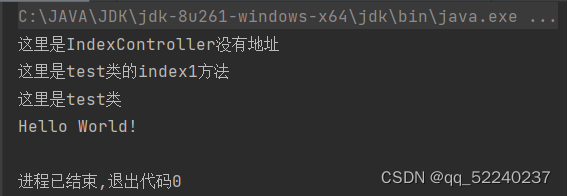
8.通过exec方法调动实例,执行实例中的方法
public class Main {
    static {
        //在当前调用类所在的同一路径下查找该fileName文件
        String path = Main.class.getResource("").getPath();
        //返回此类的包的名字
        String packageName = Main.class.getPackage().getName();
        HeaboyMvc.scanner(path,packageName);
    }

    public static void main(String[] args) {
        HeaboyMvc.exec("","");
        HeaboyMvc.exec("test","index1");
        HeaboyMvc.exec("test","");
        System.out.println("Hello World!");
    }
}
9.执行结果











![[保研/考研机试] KY129 简单计算器 浙江大学复试上机题 C++实现](https://img-blog.csdnimg.cn/2397235da5da434d96b767297e4328d8.png)
