The Eclipse Dataspace Connector (EDC) is an open-source project designed to provide a standardized method for connecting and sharing data within data spaces. It is a part of the Eclipse Foundation, aiming to promote interoperability for data sharing and data exchange. Here are some key features and functionalities of the EDC:
Data Interoperability: EDC offers a standardized approach to enable data exchange between different systems, eliminating the need for specific technologies or platforms.
Data Governance and Security: EDC includes robust data governance and security features to ensure that data is protected during the sharing process. Data owners can control who has access to their data and how it is used.
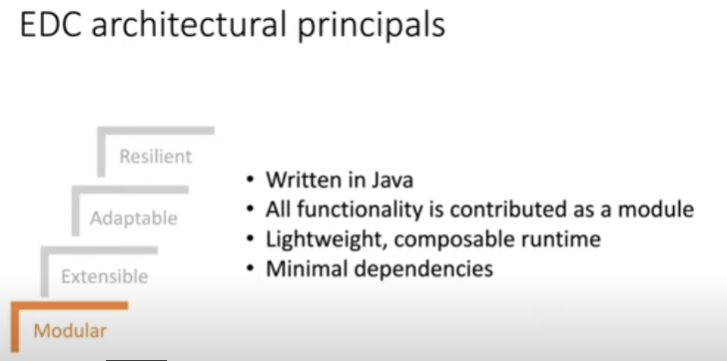
Modular Design: EDC has a modular design, allowing users to extend and customize its functionalities based on their needs. Users can add or remove modules to fit different data sharing scenarios.
Ecosystem Integration: EDC supports integration with existing IT infrastructures and ecosystems, including cloud services, enterprise systems, and other data platforms.
Standardized Protocols: EDC uses standardized protocols such as HTTP and RESTful APIs to ensure compatibility and ease of use with other systems.
Open Source Community: As an open-source project, EDC is developed and maintained by an active community. Users can participate by contributing code and suggesting improvements.
With these features, the Eclipse Dataspace Connector provides organizations with an effective solution for sharing data in a secure, controlled, and interoperable environment. It also offers extensive documentation and examples to help users get started quickly, tailored to specific needs or application scenarios.
What role does the EDC play in a Dataspace?
This section likely covers the importance and function of the Eclipse Dataspace Connector within a data space, explaining how it facilitates data sharing and interoperability among different systems and organizations.
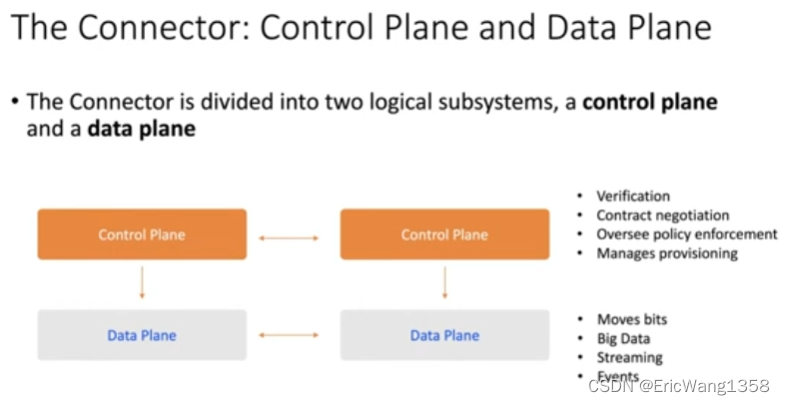
This part will discuss the foundational principles and design aspects of EDC, including its modular architecture, standardization efforts, and how it ensures secure and efficient data exchanges.
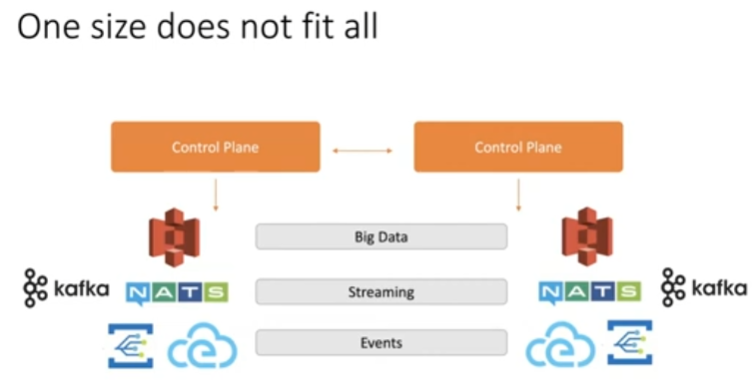
利用已投资的高可用性基础设施(Leverages high-availability infrastructure that you have already invested in)
EDC利用您已经投资的高可用性基础设施,确保系统的稳定性和高性能。
云服务(Cloud services)
EDC可以集成和利用云服务,提供可靠的计算和存储能力。
数据存储(Data storage)
EDC能够利用现有的数据存储解决方案,确保数据的安全和可用性。
数据传输技术(Data transfer technologies)
EDC可以利用各种数据传输技术,确保数据在不同系统之间的高效和安全传输。
The EDC Foundation
Here, the focus will be on the foundational aspects of EDC, such as its core components, the underlying technology stack, and the community or organizational support structure that maintains and evolves the project.
This section is likely dedicated to the core functionality of the EDC connector itself, detailing how it connects different systems, handles data transfer, and ensures compliance with interoperability standards.这一部分可能专门介绍EDC连接器本身的核心功能,详细说明它如何连接不同的系统、处理数据传输,并确保符合互操作性标准。
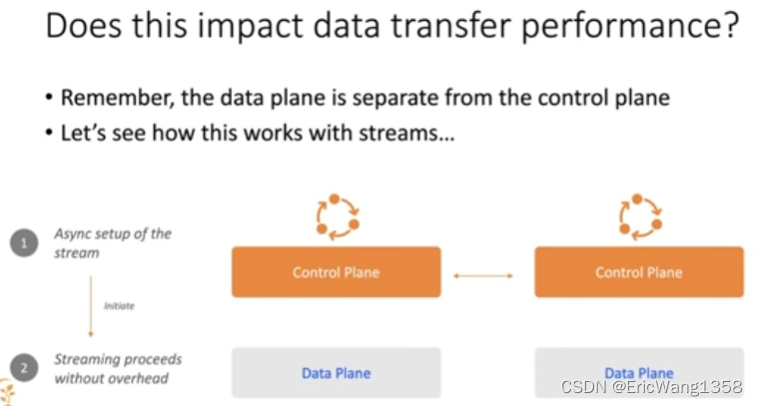
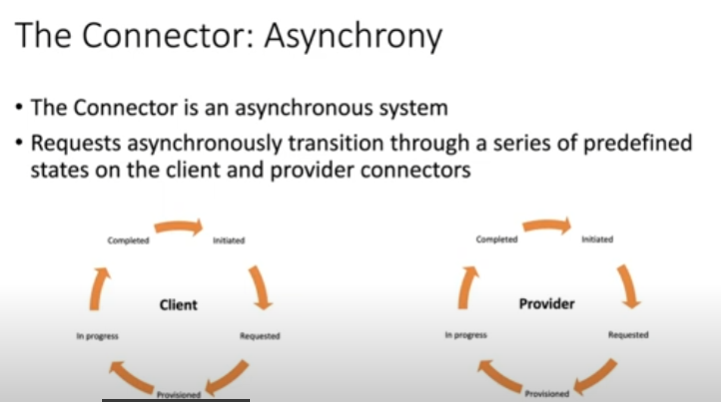
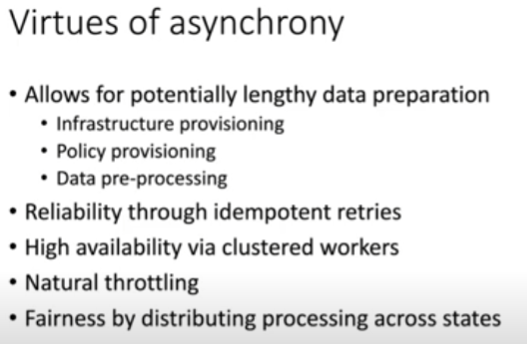
请求的异步状态转换(Requests asynchronously transition through predefined states)
数据请求在客户端和提供者连接器上通过一系列预定义的状态异步转换。
状态转换过程
客户端(Client)
Initiated(启动)
请求被启动。
Requested(请求)
请求被发送到提供者。
Provisioned(提供中)
请求正在处理中。
In progress(进行中)
请求正在被执行。
Completed(完成)
请求已完成。
提供者(Provider)
Initiated(启动)
请求被启动。
Requested(请求)
请求已收到。
Provisioned(提供中)
请求正在处理中。
In progress(进行中)
请求正在被执行。
Completed(完成)
请求已完成。
Impact
Does?
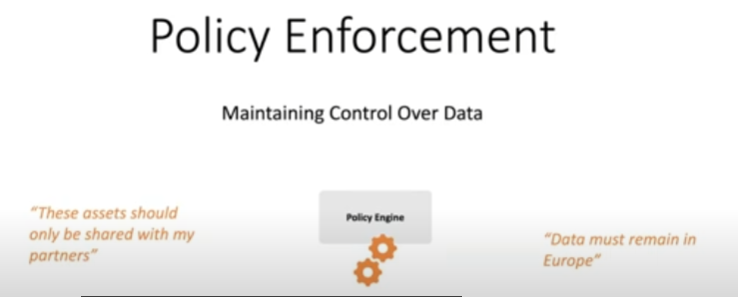
Policy enforcement
Policy Enforcement
This point will cover how EDC enforces data governance policies, ensuring that data sharing adheres to security, privacy, and usage policies defined by data owners and regulatory bodies.这一点将讨论EDC如何执行数据治理策略,确保数据共享符合数据所有者和监管机构定义的安全、隐私和使用策略。
This final section will discuss the federated catalog services provided by EDC, which likely include features for managing and discovering data assets across distributed and federated data environments, enabling seamless data access and integration.最后一部分将讨论EDC提供的联邦目录服务,其中可能包括管理和发现分布式和联邦数据环境中数据资产的功能,从而实现无缝的数据访问和集成。
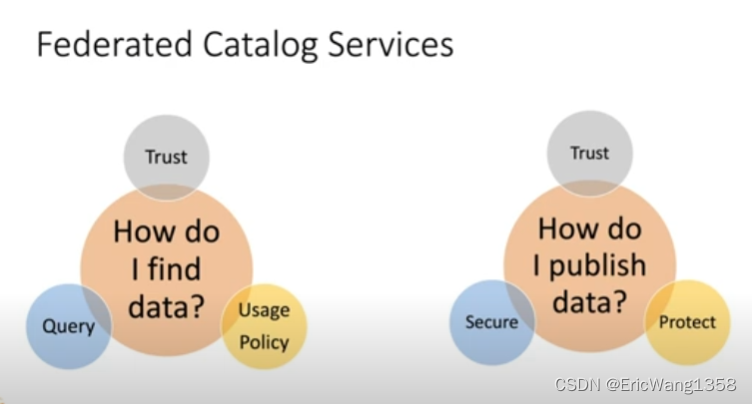
联邦目录服务(Federated Catalog Services)
查找和发布数据
如何查找数据?(How do I find data?)
涉及信任(Trust)、查询(Query)、使用策略(Usage Policy)。
如何发布数据?(How do I publish data?)
涉及信任(Trust)、安全(Secure)、保护(Protect)。
完全和半中心化目录架构(Fully- and Semi-Centralized Catalog Architectures)
需要一个代理来发布目录(Require a broker where participants publish their catalogs)
示例
中心化代理数据空间(Centralized Broker Dataspace)
半中心化数据空间(Semi-Centralized Dataspace)
中心化目录架构的常见问题(Common Issues with Centralized Catalog Architectures)
数据可见性和主权(Data visibility and sovereignty)
第三方访问组织的数据目录是否可接受?
组织依赖第三方来宣传其数据是否可接受?
第三方目录提供商能否正确执行组织的访问规则?
可靠性和可扩展性(Reliability and scalability)
在完全中心化系统中,如果目录宕机会发生什么?
在半中心化系统中,如何管理大规模复制?
联邦目录服务(Federated Catalog Services)
解决数据可见性和企业可扩展性与可靠性问题(Solves the problems of data visibility and enterprise scalability & reliability)
联邦缓存爬虫(Federated Cache Crawler, FCC)
定期抓取并缓存其他参与者的目录
数据查询在本地缓存中执行
联邦缓存节点(Federated Cache Node, FCN)
向其他FCC宣传资产
通过访问策略和合同使用策略执行访问控制
示例策略
访问策略(Access Policy):只允许我的合作伙伴访问此数据("Only allow my partners to access this data")
使用策略(Usage Policy):组织只能在欧洲存储此数据("Organizations can only store this data in Europe")
文章目录 逻辑结构存储结构顺序存储链式存储单链表双链表循环单链表循环双链表静态链表 数据的操作顺序结构链式结构单链表双链表 逻辑结构
线性表是具有相同数据类型的 n ( n ≥ 0 ) n(n≥0) n(n≥0)个数据元素的有限序列,其中 n n n为表长,当 n 0 n0…