- 客户端抢到分布式锁之后开始执行任务,执行完毕后再释放分布式锁。
- 持锁后因客户端异常未能把锁释放,会导致锁成为永恒锁。
- 为了避免这种情况,在创建锁的时候给锁指定一个过期时间。
- 到期之后锁会被自动删除掉,这个角度看是对锁资源的一种保护。
- 重点:但若锁过期被删除后,任务还没结束怎么办?
- 可以通过在一个额外的线程中主动推迟分布式锁的过期时间,下文也用续期一词来表述;避免当任务还没执行完,锁就被删除了。
- 但当分布式锁很多的情况下,每个锁都配置一个线程着实浪费,所以是否可以用线程池里的定时任务呢?
使用 ScheduledExecutorService#scheduleAtFixedRate来实现定时任务,它的运行机制大概是这样:
- 如果上一个任务的执行时间大于等待时间,任务结束后,下一个任务马上执行。
- 如果上一个任务的执行时间小于等待时间,任务结束后,下一个任务在(间隔时间-执行时间)后开始执行。
在分布式锁主动续期的场景下,它也满足如下定律:

二、理还乱?
用 ScheduledExecutorService#scheduleAtFixedRate逻辑看很简单,也很清晰,但任何事情都有两面性,把任务丢给线程池的方式,实现起来自然简单清晰,但肯定也有弊端。如果要把锁的功能做的健壮,总要从不断地自我质疑、自我反思中,理顺思路,寻找答案,我认为这属于自省式学习,以后也想尝试这种模式,一起再看看有啥问题:
-
问题:锁主动释放的时候,续期的任务要关闭嘛?
是的,当锁被用户主动关闭的时候,主动续期的任务是要主动取消掉的。
-
问题:如果我不主动取消呢?
对于不主动续期的锁,抢锁后配置一个合适的过期时间,到期之后锁自然会被释放;这种情况下,客户端本就没有续期任务需要取消。但如果有额外的线程|线程池在定时续期的话,锁用完了需要被释放掉,任务一定要主动取消掉。
-
问题:可万一忘记了呢?
有加锁解锁的代码模板,按照模板来;获取锁之后,在finally中执行释放锁的操作。
boolean lockResult = lockInstance.tryLock(); if(lockResult){ //do work }finally{ lockInstance.unLock(); } 复制代码 -
万一程序异常崩了,没执行finally呢?
如果程序异常崩了,进程消失后,进程内的资源自然就都释放掉了:续期任务没有了,续期的线程|线程池也没有了。但锁资源就需要依赖锁服务,如 Redis ,在锁过期后主动释放掉锁资源。
-
问题:关于停止任务,在前文独立线程的实现方式中,有介绍可通过中断机制;但是线程池里的任务怎么取消呢?
遇事不决问百度,排名第一必有解

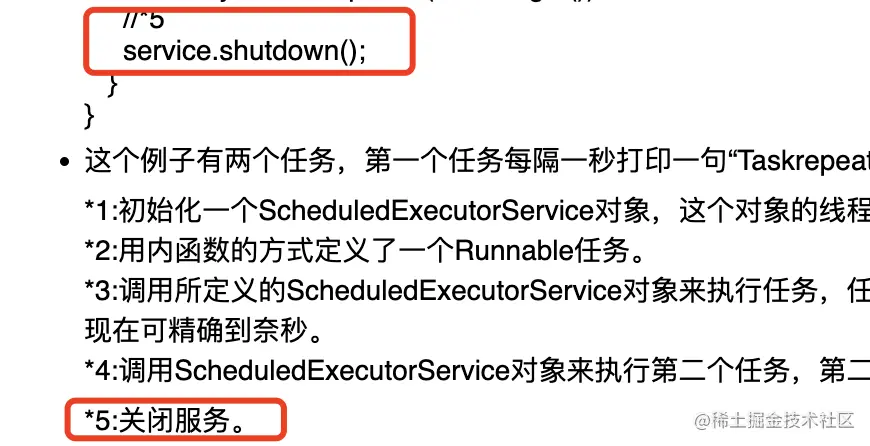
咱得本意是取消一个任务,示例给出的方法是要把线程池关掉。
-
问题:取消一个任务,要把整个线程池都关掉?
按照示例所给的办法是不行的,每个任务的取消,都要关闭整个线程池的话,若给每个任务都配有独立的取消能力,就需要给每个任务都配一个独立的线程池,这就跟每个锁配一个独立的线程没有区别了。
-
问题:目标是多个任务共享一个线程池,怎么不关闭线程池而只关闭特定的任务呢?
百度出来跟问题相关的文章本就不多,而多数文章提供的奇思妙招并不好使,笔者是浪费了一些时间的,但不能再耽误读者朋友的时间,直接给思路:解铃还须系铃人,
scheduleAtFixedRate的返回值是是ScheduledFuture。 -
问题:看到 xxxFuture 是否想能想起
Future接口的能力?猜测熟悉
get()方法的同学应该特别多,但不知道熟不熟悉cancel方法,如果看到这个方法感到惊喜,欢迎留言互动。public interface Future<V> { boolean cancel(boolean mayInterruptIfRunning); ... V get() throws InterruptedException, ExecutionException; ... } 复制代码 -
问题:
cancel方法好使嘛?不看理论看实效果,试试看:
public static void testCancel() throws InterruptedException {
    ScheduledExecutorService scheduledExecutorService = Executors.newScheduledThreadPool(1);

    System.out.println(" start : " + LocalDateTime.now().format(DateTimeFormatter.ISO_LOCAL_DATE_TIME));
    ScheduledFuture<?> scheduledFuture = scheduledExecutorService.scheduleAtFixedRate(() -> {
        System.out.println("  work : " + LocalDateTime.now().format(DateTimeFormatter.ISO_LOCAL_DATE_TIME));
    }, 5, 5, TimeUnit.SECONDS);

    TimeUnit.SECONDS.sleep(15);
    scheduledFuture.cancel(true);
    System.out.println("cancel : " + LocalDateTime.now().format(DateTimeFormatter.ISO_LOCAL_DATE_TIME));
    TimeUnit.SECONDS.sleep(30);
}
复制代码
效果满足预期,成功取消了。
 start : 2022-12-10T19:24:31.508
  work : 2022-12-10T19:24:36.538
  work : 2022-12-10T19:24:41.539
  work : 2022-12-10T19:24:46.541
cancel : 2022-12-10T19:24:46.541 //成功取消
复制代码
-
问题:
cancel里都做了什么呢?看源码可知,其内有两层核心逻辑:
- 尝试取消正在执行的任务
- 避免任务再被定时执行
public boolean cancel(boolean mayInterruptIfRunning) {
    // 1. 先调用父类FutureTask#cancel来取消任务。
    boolean cancelled = super.cancel(mayInterruptIfRunning);
    //2. 核心逻辑是从队列中删除该任务。
    if (cancelled && removeOnCancel && heapIndex >= 0)
        remove(this);
    return cancelled;
}
复制代码
至此,关于使用线程池来执行|取消续期任务,看起来已经没啥问题了;美丽的心情应该是这样的。

OK,稍微开心一下就好,还有问题呢,不想划开的,咱不等了。
三、新的思考
-
问题:
cancel的参数mayInterruptIfRunning是什么意思?从父类cancel方法的注释中可以寻找到答案,如果是 true 的话,即代表尝试通过中断的方式来停止任务
If the task has already started, then the mayInterruptIfRunning parameter determines whether the thread executing this task should be interrupted in an attempt to stop the task.
@Override public boolean cancel(boolean mayInterruptIfRunning) { if (RESULT_UPDATER.compareAndSet(this, null, CANCELLATION_CAUSE_HOLDER)) { if (checkNotifyWaiters()) { notifyListeners(); } return true; } return false; } 复制代码 -
问题:那就是说也可能抛出
InterruptedException了?如果是抛出
InterruptedException,示例中,并未看到程序测试有异常中断,也未看到有异常日志信息。 -
问题:怎么有点玄学了,还能不是
interrupt机制?在任务内尝试捕获一下看看:
public static void testExceptionCatch() throws InterruptedException {
    ScheduledExecutorService scheduledExecutorService = Executors.newScheduledThreadPool(1);
    ScheduledFuture<?> scheduledFuture = null;
    System.out.println(" start : " + LocalDateTime.now().format(DateTimeFormatter.ISO_LOCAL_DATE_TIME));
    try {
        scheduledFuture = scheduledExecutorService.scheduleAtFixedRate(() -> {
            System.out.println("  work : " + LocalDateTime.now().format(DateTimeFormatter.ISO_LOCAL_DATE_TIME));
            try {
                TimeUnit.SECONDS.sleep(1);
            } catch (InterruptedException e) {
                e.printStackTrace();
            }
            //throw new RuntimeException("");
        }, 5, 5, TimeUnit.SECONDS);
    }catch (Exception exp){
        exp.printStackTrace();
    }
    TimeUnit.SECONDS.sleep(15);
    scheduledFuture.cancel(true);
    System.out.println("cancel : " + LocalDateTime.now().format(DateTimeFormatter.ISO_LOCAL_DATE_TIME));
    TimeUnit.SECONDS.sleep(30);
}

复制代码
结果中的信息
java.lang.InterruptedException: sleep interrupted可以明确是任务内的逻辑是可通过中断机制实现的。start : 2022-12-10T20:10:31.248 work : 2022-12-10T20:10:36.276 work : 2022-12-10T20:10:41.272 work : 2022-12-10T20:10:46.277 cancel : 2022-12-10T20:10:46.277 java.lang.InterruptedException: sleep interrupted at java.lang.Thread.sleep(Native Method) at java.lang.Thread.sleep(Thread.java:340) at java.util.concurrent.TimeUnit.sleep(TimeUnit.java:386) at com.wushiyii.lock.ScheduleTest.lambda$testExceptionCatch$1(ScheduleTest.java:39) at java.util.concurrent.Executors$RunnableAdapter.call(Executors.java:511) at java.util.concurrent.FutureTask.runAndReset(FutureTask.java:308) at java.util.concurrent.ScheduledThreadPoolExecutor$ScheduledFutureTask.access$301(ScheduledThreadPoolExecutor.java:180) at java.util.concurrent.ScheduledThreadPoolExecutor$ScheduledFutureTask.run(ScheduledThreadPoolExecutor.java:294) at java.util.concurrent.ThreadPoolExecutor.runWorker(ThreadPoolExecutor.java:1149) at java.util.concurrent.ThreadPoolExecutor$Worker.run(ThreadPoolExecutor.java:624) at java.lang.Thread.run(Thread.java:748) 复制代码 -
问题:之前实例中取消任务时,外部也无异常信息,线程池内部留着这个异常干嘛了呢?
直接抛出异常试试看
public static void testExceptionCatch() throws InterruptedException {
    ScheduledExecutorService scheduledExecutorService = Executors.newScheduledThreadPool(1);
    ScheduledFuture<?> scheduledFuture = null;
    System.out.println(" start : " + LocalDateTime.now().format(DateTimeFormatter.ISO_LOCAL_DATE_TIME));
    try {
        scheduledFuture = scheduledExecutorService.scheduleAtFixedRate(() -> {
            System.out.println("  work : " + LocalDateTime.now().format(DateTimeFormatter.ISO_LOCAL_DATE_TIME));
            throw new RuntimeException("just throw ");
            //throw new RuntimeException("");
        }, 5, 5, TimeUnit.SECONDS);
    }catch (Exception exp){
        exp.printStackTrace();
    }
    TimeUnit.SECONDS.sleep(15);
    scheduledFuture.cancel(true);
    System.out.println("cancel : " + LocalDateTime.now().format(DateTimeFormatter.ISO_LOCAL_DATE_TIME));
    TimeUnit.SECONDS.sleep(30);
}
复制代码
仔细观察能看出,结果变的有意思了,work只执行了一次,前文中的执行结果中work都执行了3次,这里却只执行了一次。
start : 2022-12-10T20:16:53.285 work : 2022-12-10T20:16:58.307 cancel : 2022-12-10T20:17:08.305 复制代码 -
问题:任务内抛出异常能导致定时任务失去定时执行的能力?
是的,使用
scheduleAtFixedRate有以下几个情况必须注意:- 任务逻辑中未捕获的异常能导致本该定时执行的任务,后续不再执行。
- 任务逻辑中未捕获的异常不会外抛,外部感知不到。
- 任务逻辑中的异常,需在任务逻辑内捕获并记录,否则无处可知。
看起来定时任务的使用的确是不能随心所欲的,毕竟大美也总是会说:

-
问题:那还有什么注意事项?
给线程池指定的线程数要合理,不要无限制的提交任务,也不要每提交一个任务就new一个线程池。还有...
老板亲情提示:面都坨了,快点吃,不然不好吃了。
嗯,【自省】也不能饿肚子,该吃饭了。
如果您还知道一些需要注意的玄妙机制,欢迎留言讨论;咱们下一篇再聊。

四、最后说一句
如果这篇文章对您有帮助,或者有所启发的话,欢迎进行交流和学习。您的支持是我坚持写作最大的动力。